
Best Dhoop Sticks for Pooja: How to Choose the Right Fragrance
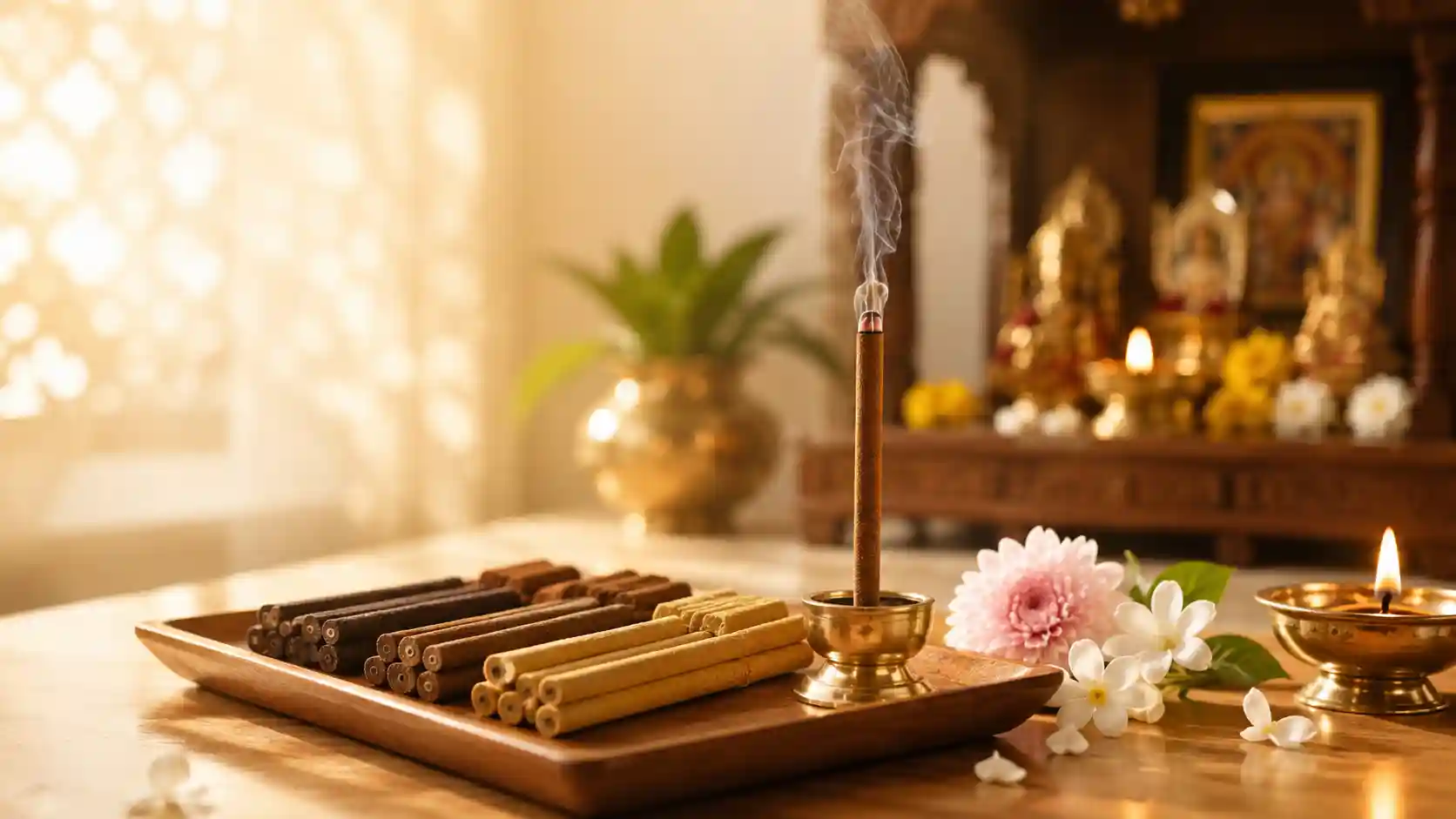
The best dhoop sticks for pooja are the ones whose fragrance you genuinely enjoy during your moments of bhakti.
Chandan-inspired fragrances are a popular choice for those who prefer warm and familiar aromas, while Gulab and Champa are suited to devotees who enjoy floral fragrances.
There is no single best dhoop stick for every Hindu home.
The right choice depends on your fragrance preference, your pooja routine, and the kind of atmosphere you enjoy in your home mandir.
Choosing dhoop sticks for daily pooja may seem simple, until you discover just how many fragrances and varieties are available.
Chandan, Gulab, Champa, richer fragrance blends, dhoop sticks, dhoop cups… how do you know what to choose?
So, which are the best dhoop sticks for pooja?
The simple answer is: the ones that feel right for your moments with Bhagwan.
Fragrance is personal. What feels warm and comforting to one devotee may feel different to another.
Your choice can depend on the aromas you naturally enjoy, the atmosphere of your home mandir, and how you practise your daily pooja.
So instead of searching for one universally “best” fragrance, let your own preference guide you.
Here is a simple way to choose.
What Are Dhoop Sticks?
Dhoop sticks are fragrant incense sticks commonly offered during Hindu pooja, aarti, and other devotional moments. Once lit, they slowly release fragrance and smoke into the surrounding space, helping create a devotional atmosphere for worship.
For many Hindu homes, lighting dhoop is a familiar part of daily pooja. It may be offered during morning pooja, before aarti, or while spending a few quiet moments in the home mandir.
Unlike regular agarbatti, many dhoop sticks are made without a bamboo core. These are commonly known as bamboo-less dhoop sticks and are generally thicker than traditional agarbatti.
If you are looking for dhoop for your everyday worship, you can explore our Dhoop Sticks for Daily Pooja collection.
Which Dhoop Sticks Are Best for Daily Pooja?
For daily pooja, we recommend choosing a fragrance that you can comfortably experience every day.
A very strong fragrance may feel pleasant occasionally but can become overwhelming when used regularly, especially in a smaller home mandir or pooja space.
Gentle and balanced fragrances are often easier to make part of an everyday pooja routine.
The right choice, however, is personal.
Some devotees love the familiar warmth of chandan. Some naturally prefer floral fragrances. Others enjoy deeper aromas during longer moments of prayer and bhakti.
Instead of asking,
“Which is the best dhoop batti?”,
a better question may be:
“Which fragrance feels right for my daily pooja?”
Here are a few simple ways to choose.
Choose Chandan Dhoop Sticks for a Warm, Familiar Fragrance
Chandan, or sandalwood-inspired fragrance, is a timeless choice for daily pooja.
Its warm and familiar aroma can create a comforting atmosphere in the home mandir during morning pooja, evening aarti, and everyday moments of bhakti.
If you enjoy traditional, warm fragrances for your daily pooja, a Chandan-inspired dhoop stick can be a wonderful place to begin.
Choose Floral Dhoop Sticks If You Enjoy Floral Aromas
If you naturally enjoy the fragrance of flowers, floral dhoop sticks may feel more suited to your home. Fragrances inspired by gulab, mogra and champa each have their own character.
Madhur Gulab offers a familiar rose-inspired fragrance, while Devarpan Champa brings the character of a traditional floral aroma to your daily pooja.
There is no need to choose a fragrance simply because someone calls it the “best fragrance dhoop batti.”
The best fragrance for your pooja is the one you genuinely enjoy during your moments with Bhagwan.
Choose Richer Fragrances for Longer Moments of Bhakti
Not every pooja is the same. Sometimes you may spend only a few minutes offering your prayers before beginning the day. On other days, you may sit for longer during japa, path, bhajan or a special pooja at home.
For these longer moments, some devotees may prefer a richer fragrance experience.
This is why having more than one type of dhoop stick at home can be useful. You can choose a gentle fragrance for everyday pooja and keep another fragrance for longer devotional moments or special occasions.
Your daily bhakti does not have to look or smell exactly the same every day.
Are Bamboo-Less Dhoop Sticks Good for Pooja?
Yes. Bamboo-less dhoop sticks can be used during daily pooja, aarti, and other devotional moments.
As the name suggests, bamboo-less dhoop sticks do not have the thin bamboo core commonly found in agarbatti. Instead, the dhoop material itself is formed into the shape of a stick.
All Dharmic Sakha dhoop sticks are bamboo-less. Our dhoop sticks and fragrances are thoughtfully selected with Hindu pooja and Hindu homes in mind, so they can naturally become part of your everyday moments of bhakti.
Dhoop Sticks or Dhoop Cups: Which Should You Choose?
Both dhoop sticks and dhoop cups can be used during pooja, but they offer different experiences.
Dhoop sticks are convenient for daily pooja and can easily become part of a morning or evening sacred routine.
Dhoop cups offer a different style of dhoop experience and are available in traditional variants such as Sambrani, Chandan, Loban Guggal, and Gau Sambrani Havan Cups.
Many Hindu homes may choose to keep both and use them according to their pooja routine, the occasion, or the experience they prefer.
You can also explore our Sambrani Dhoop Cups for Pooja to discover the different variants available.
How Do You Choose Dhoop Sticks for Your Home Mandir?
Start with your own fragrance preference.
Ask yourself:
- Do I enjoy warm fragrances like chandan?
- Do I prefer floral aromas?
- Do I want something for everyday pooja?
- Am I looking for a richer fragrance for longer prayers?
- Is my pooja space small or spacious?
Best Dhoop for Home
A home feels different after dhoop is lit. The gentle fragrance, the quiet moments during pooja, and the peaceful atmosphere are why many Hindu families make dhoop a part of their daily routine.
If you’re wondering which dhoop is best for your home, there isn’t one fragrance that’s perfect for everyone. The right choice depends on when you’re using it and the kind of atmosphere you’d like to create.
Morning Pooja
Morning is about beginning the day with calmness and positivity. We generally recommend soft, comforting fragrances that don’t feel overpowering.
Our favourites for morning pooja are:
- Nava Chandan – Soft, creamy sandalwood that’s peaceful and welcoming.
- Devarpan Champa – A gentle floral fragrance that’s uplifting without being too strong.
- Kusum Chandan – A balanced blend that feels warm and devotional.
Evening Pooja
Evening pooja often marks the transition from a busy day to a peaceful evening with family. Slightly richer fragrances work beautifully during this time.
Our recommendations are:
- Anand Sparsh
- Madhur Gulab
These fragrances create a warm devotional atmosphere that’s perfect for evening prayers and aarti.
Which Dhoop Should You Buy First?
If you’re buying dhoop sticks for the first time, we’d recommend starting with Nava Chandan.
Sandalwood (Chandan) has been loved for generations and is one of those fragrances that appeals to almost everyone. Its soft, creamy aroma feels familiar, calming, and is perfect for everyday pooja.
If you’d like to explore something beyond sandalwood, Madhur Gulab and Devarpan Champa are excellent next choices.
Don’t Stick to Just One Fragrance
One recommendation we often give is to enjoy different fragrances throughout the week instead of using the same one every day.
Changing fragrances can make every pooja feel fresh and special while allowing you to experience different moods and devotional moments.
That’s why many devotees prefer our Pack of 3 or Pack of 5 Make Your Own Combo, where you can choose multiple fragrances instead of limiting yourself to just one.
Whether you enjoy sandalwood one morning or rose during evening aarti, variety brings a new experience to your daily bhakti.
You don’t need to find the “perfect” dhoop stick immediately. Try different fragrances and notice which one naturally feels pleasant in your home mandir.
Over time, you may find yourself reaching for the same fragrance every morning.
That is probably your answer.
Can You Use Dhoop Sticks Every Day?
Dhoop sticks are commonly used as part of daily pooja routines in Hindu homes.
If you choose to use dhoop every day, always place the burning stick in a suitable heat-safe holder and maintain appropriate ventilation in the room. Keep burning dhoop away from children, curtains, and other flammable materials, and never leave it unattended.
For daily use, choose a fragrance that feels comfortable and enjoyable in your pooja space.
Ready to Find the Right Dhoop Sticks for Your Pooja?
Every home has its own way of connecting with Bhagwan, and the fragrance you choose can become a familiar part of those everyday moments of bhakti.
At Dharmic Sakha, our bamboo-less dhoop sticks are thoughtfully crafted for Hindu pooja and Hindu homes. From warm chandan fragrances to floral and richer aromas, the collection is created to help you find one that feels right for your daily pooja.
Explore our Dhoop Sticks for Daily Pooja and find the fragrance for your home mandir.