
Dhoop for Pooja: The Tradition Behind This Fragrant Offering
For generations, dhoop has been a part of how we offer our bhakti to Bhagwan.
You may have seen it being lit during pooja since childhood.
Maybe the fragrance reminds you of your home mandir, your grandparents, a temple, or those few quiet minutes before an aarti.
But have you ever stopped to think about what we’re actually doing when we light dhoop?
Come, let me tell you.
So, What Is Dhoop?
You’ve probably heard the word dhoop many times. But traditionally, dhoop wasn’t the name of one particular stick, cup or product.
Dhūpa (धूप) refers to a fragrant offering used during worship.
Different traditions used different fragrant materials, resins, woods, herbs, powders and other aromatic substances.
Over time, these offerings have taken many forms.
Today, you may know them as:
– Dhoop sticks
– Dhoop cups
– Sambrani or Guggal dhoop
– Havan dhoop
– Other forms of incense
So when we talk about dhoop today, we’re really talking about a much older idea.
A fragrant offering made to Bhagwan.
And I think that distinction matters because dhoop isn’t simply something we light because we want our home to smell good.
It is something we offer.
Why Do We Offer Dhoop During Pooja?
Think about the way we perform pooja. We don’t only pray with words. We offer.
We offer flowers.
We offer water.
We offer food.
We offer light.
And we offer fragrance through Dhūpa.
In traditions that follow Ṣoḍaśopachāra, the sixteen forms of respectful service offered during worship, Dhūpa is included as one of the offerings.
And there’s something beautiful about the way our traditions approach this.
When we offer something to Bhagwan, we’re not offering it because Bhagwan needs it.
We’re offering it because we want to give. It’s an expression of seva, shraddha and bhakti.
So when I light dhoop before Bhagwan, I don’t see it as just another step in my pooja.
I see it as a small act of offering.
And Dhoop Has Been Offered in Many Forms
This is where our traditional understanding of dhoop becomes interesting. There wasn’t always a single, standardised form of incense sitting in every Hindu home.
Traditional sources describe different fragrant materials being combined and offered through Agni.
Fragrant resins such as guggulu, sandalwood, aguru, camphor, aromatic roots and other substances appear in traditional descriptions of incense. The exact ingredients and preparations could vary.
And that tells us something important:
The tradition was never about one particular product.
It was about the fragrant offering.
The form could change. The ingredients could change.
But the intention behind the offering remained.
And that brings us to something I wanted to create for the modern Hindu home.
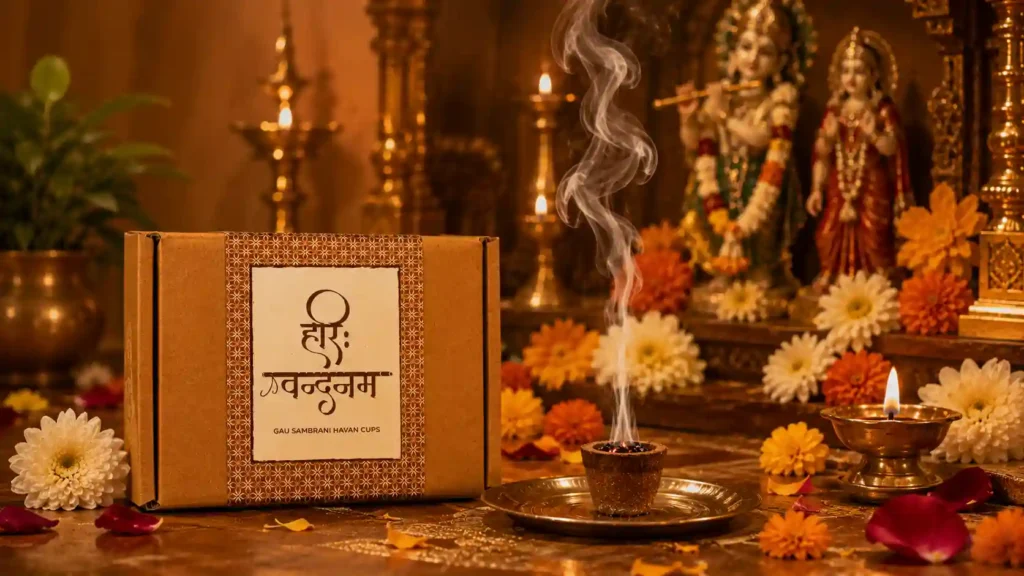
Gau Sambrani Havan Cups
I wanted to bring together the feeling of a traditional fragrant offering with the simplicity of everyday home pooja.
That’s where our Gau Sambrani Havan Cups come in.
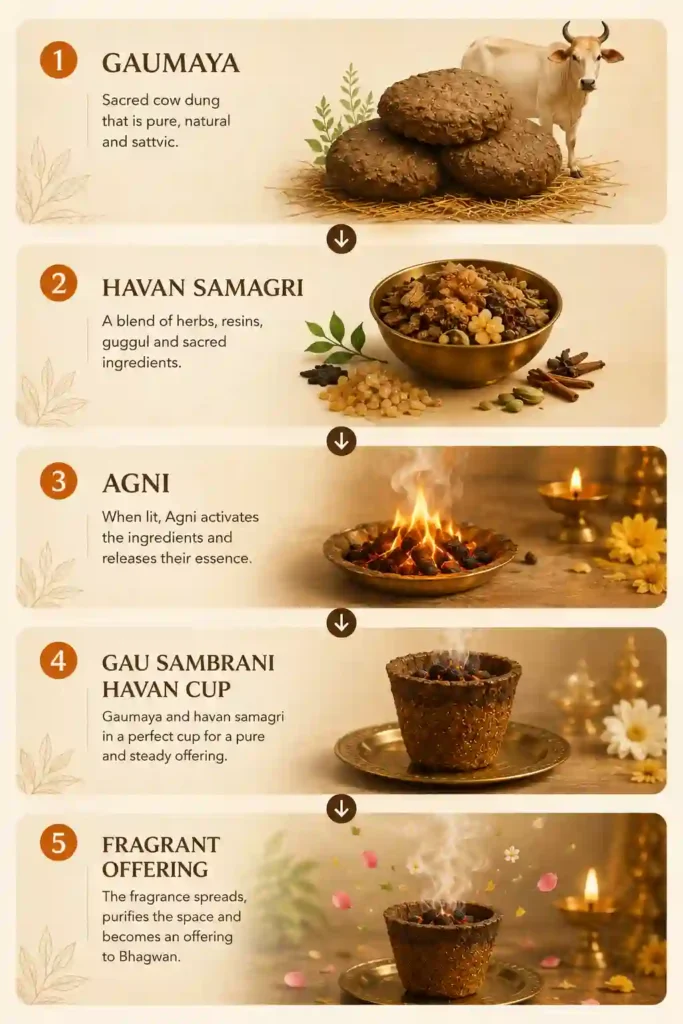
Each cup brings together:
Gaumaya + Havan Samagri + Agni
The cup is made using Gaumaya (cow dung) and contains Havan Samagri within it.
When you light it, Agni gradually burns the cup and its contents, releasing fragrant smoke that becomes part of your pooja and devotional atmosphere.
There is no complicated preparation. Just a simple cup, the Agni, the fragrance and your offering.
Why Did I Make It This Way?
Let me explain the thought behind it.
When we think about a traditional havan, we often imagine a proper havan kund, different samagri, preparation and time. And there is something beautiful about that.
But our everyday lives don’t always give us the opportunity to prepare an elaborate ritual.
You may have only a few quiet minutes before starting your day.
You may want to sit before your home mandir in the evening.
You may simply want to make a small offering to Bhagwan.
I wanted there to be a simple way to bring a havan-inspired fragrant offering into those everyday moments.
Not as a replacement for performing a complete havan. But as a simple form of offering that can have a place in your home pooja.
What Makes Gau Sambrani Havan Cups Different?
It comes down to those three simple elements:
– Gaumaya
The cup itself is made using Gaumaya (cow dung).
– Havan Samagri
Traditional Havan Samagri is contained within the cup.
– Agni
When you light the cup, Agni gradually burns through it and the samagri within.
Together, they create a fragrant offering that becomes part of your worship. And that’s what I wanted to preserve.
Not complexity but the feeling of offering.
Dhoop Sticks or Gau Sambrani Havan Cups?
You don’t have to choose one forever. Both can have a place in your home.
Dhoop sticks are a familiar and convenient way to bring fragrance into your daily pooja. They come in different fragrance profiles and are easy to use.
Gau Sambrani Havan Cups bring together Gaumaya(cow dung) and Havan Samagri in a cup format, using Agni to create a fragrant, havan-inspired offering.
So I wouldn’t tell you that one is automatically better.
They are simply different ways of bringing a fragrant offering into your pooja.
Choose what feels right for the kind of worship you want to create at home.
How Do You Use a Gau Sambrani Havan Cup?
This part is simple.
1. Place the cup safely
Keep one cup on a suitable heat-resistant surface.
2. Light it from the sides (preferably all sides)
Allow the cup to catch fire.
3. Let it burn and smoulder
The Agni gradually burns the cup and its contents, releasing the fragrance.
4. Keep the space ventilated
Use it in a well-ventilated area and keep it away from anything that could catch fire.
5. Never leave it unattended
Once you’re done, allow it to finish safely and ensure the ashes are completely extinguished before disposal.
That’s it. No elaborate preparation. Just a simple offering.
When Can You Use Dhoop at Home?
You don’t have to wait for a festival to make an offering.
Dhoop can naturally become part of the everyday rhythm of your home mandir.
You can use it during, daily pooja, morning or evening worship, aarti, festivals and special occasions and home mandir rituals, Or simply on a day when you feel like sitting quietly before Bhagwan.
Because bhakti doesn’t always need a special occasion.
Sometimes, an ordinary day is enough.
Is Dhoop Only About Fragrance?
This is something I think is worth remembering.
Of course, we notice the fragrance first.
It fills the room. It stays for a while.
It becomes part of the atmosphere of our pooja.
But the tradition goes deeper than simply making a space smell pleasant.
When we offer a flower, the flower itself isn’t the whole point.
When we offer food, the food isn’t the whole point.
When we light a diya, the flame isn’t the whole point.
The offering is an expression of something within us. The same is true of dhoop.
The material may be simple. The bhava behind the offering is what gives it meaning.
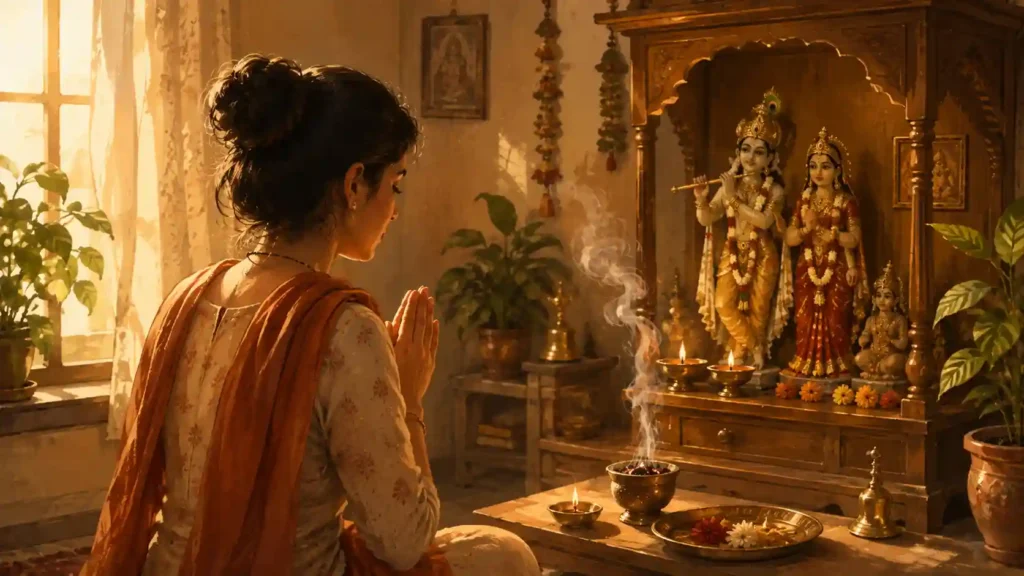
What Does Dhoop Bring Into Everyday Life?
Now imagine your own morning.
You wake up.
There are messages waiting on your phone. Work is already on your mind. There are things to finish. Things to worry about.
And then, for a few minutes, you stand before your mandir.
You light the dhoop. You watch the Agni. You notice the fragrance.
And you pause.
Nothing outside may have changed.
But you have given yourself a moment to turn towards Bhagwan.
And perhaps that’s one of the beautiful things about our traditions.
They don’t always ask us to leave everyday life behind. They help us bring Bhakti into everyday life.
That’s why, for me, dhoop is more than an incense product.
It is one small way of making space for Bhagwan in the middle of an ordinary day.
Frequently Asked Questions About Dhoop
A Simple Offering. A Moment of Bhakti.
For generations, dhoop has been a part of how we offer our bhakti to Bhagwan.
The forms may change with time. The fragrances may change. The way we practise at home may change.
But the simple feeling of standing before Bhagwan and saying,
“This is my offering.” that can remain.
If you’d like to bring this tradition into your everyday pooja, you can explore Dharmic Sakha’s Gau Sambrani Havan Cups, made with Gaumaya (cow dung) and Havan Samagri in a simple form for the modern Hindu home.
A little Agni, a little fragrance, a simple offering and a moment of Bhakti.
Explore Gau Sambrani Havan Cups →